Virtual Receptionist Pricing for Medical Practices

One of the first questions clinic owners ask when exploring virtual receptionist options is a simple one: how much does it actually cost?
The answer depends heavily on which pricing model you are looking at. Virtual receptionist services for medical practices range from per-minute answering services that bill based on call volume, to flat monthly subscriptions, to dedicated hourly staffing where a trained professional works directly inside your practice systems. Each model comes with different cost structures, trade-offs, and fits for different practice sizes.
This guide breaks down what medical practices actually pay for virtual receptionist coverage in 2026, what drives costs up or down, and how to identify the model that makes the most financial sense for your specific situation.
Why Pricing Varies So Much
Virtual receptionist pricing for healthcare is not standardized. A quick search will surface costs ranging from $29 per month for basic AI call tools to $3,000 or more per month for full-service human answering operations. That range is not a sign of confusion in the market. It reflects genuinely different service types with genuinely different cost structures.
The main factors that push costs higher are human labor versus automation, HIPAA compliance requirements, call volume and coverage hours, feature complexity such as appointment booking or insurance verification, and whether the receptionist is a dedicated individual or a shared pool of agents.
Understanding the model behind a price is more important than the number itself. A $300 per month plan that bills per-minute can end up costing $1,200 in a busy month. A $13 per hour dedicated staffing model can cost less annually than many subscription services while delivering more integrated, practice-specific support.
The Main Pricing Models for Medical Practices
Per-Minute Billing
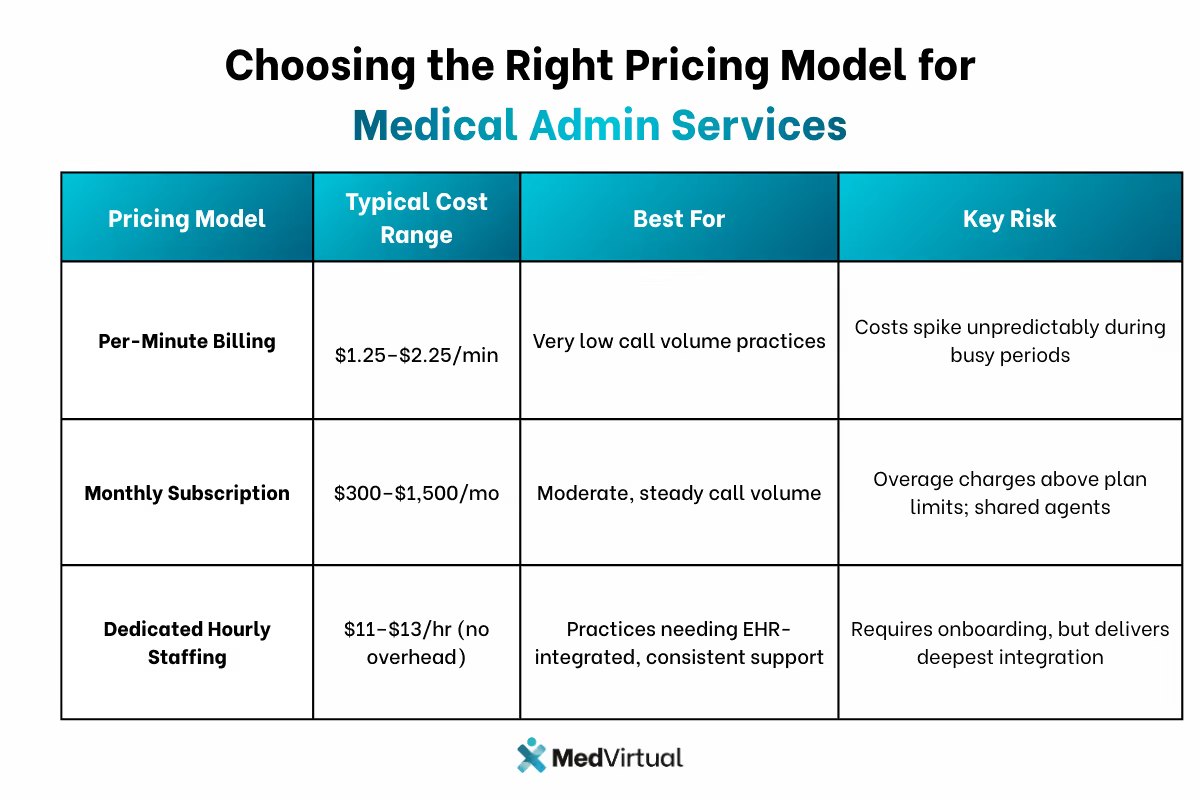
This model charges based on the total time agents spend handling your calls. Rates typically range from $1.25 to $2.25 per minute for human answering services. A practice with moderate call volume and average call lengths of three to four minutes can find this model manageable. However, it becomes expensive quickly during busy periods, and overages above plan limits often carry premium per-minute charges.
Per-minute billing is most common with third-party answering services that pool agents across many clients. Calls are answered professionally but by agents who are not embedded in your practice and may not have deep familiarity with your workflows, your EHR, or your providers.
Monthly Subscription Plans
Many services offer tiered monthly plans that bundle a set number of minutes or calls. Entry-level plans often start around $300 per month and scale to $1,500 or more depending on call volume, coverage hours, and features. These plans offer more predictable billing than pure per-minute models, though overage charges still apply when call volumes spike beyond what the plan includes.
For medical practices, the key questions with subscription plans are whether the agents are HIPAA-trained, whether a Business Associate Agreement is available, and whether the service can work within your specific scheduling and EHR systems. Generic answering services often fall short on one or more of these requirements.
Dedicated Hourly Staffing
The third model, and the one that tends to deliver the most value for practices that need consistent, integrated front desk support, is dedicated hourly staffing. Rather than a pool of shared agents, the practice works with a specific trained individual who operates inside the clinic's own systems, follows the practice's protocols, and builds familiarity with providers, workflows, and patients over time.
Through a healthcare-specific staffing partner like MedVirtual, medical administrative assistants are available starting at $11 per hour for junior roles and $13 per hour for senior roles, with no employer overhead, no benefits costs, and no payroll taxes. For a practice that needs 20 to 35 hours of front desk coverage per week, this model typically comes in well below the cost of any equivalent answering service subscription, while offering far deeper integration with the practice.
What Does HIPAA Compliance Add to the Cost?
For medical practices, HIPAA compliance is not a feature add-on. It is a baseline requirement. Any virtual receptionist service that handles patient calls, schedules appointments, or processes any information connected to patient identity must comply with HIPAA and must be willing to sign a Business Associate Agreement.
Some generic virtual receptionist services charge a premium for HIPAA-compliant tiers or require an upgraded plan to access BAA coverage. Others build compliance into every plan but only loosely, with limited training for their agents.
A healthcare-specific staffing partner eliminates this ambiguity. At MedVirtual, HIPAA training is standard for all virtual staff before placement, and the platform is built for compliant healthcare operations. There is no premium tier for compliance because compliance is not optional in healthcare.
What Medical Practices Typically Budget
For a small solo practice or single-provider clinic, a virtual receptionist through a dedicated staffing model at 20 hours per week costs approximately $880 to $1,040 per month depending on role level. That same coverage through a subscription-based answering service with HIPAA features typically runs $600 to $1,500 per month, with less integration and shared agents.
For a multi-provider practice needing full-time equivalent coverage at 35 to 40 hours per week, the dedicated staffing model runs approximately $1,870 to $2,080 per month. A comparable answering service plan would typically cost $1,500 to $3,000 per month and still may not provide the same depth of EHR integration or practice-specific familiarity.
The staffing model becomes progressively more competitive the more hours of coverage a practice needs, and it provides compounding value as the virtual receptionist builds institutional knowledge of the practice over time.
Hidden Costs to Watch For
When evaluating any virtual receptionist pricing, it is worth looking beyond the advertised base rate. Several costs are frequently underrepresented in initial quotes.
Setup and onboarding fees are common with answering services, often ranging from $50 to $500 or more depending on the provider and configuration complexity. Overage charges can be significant when call volumes exceed plan limits, particularly for services using per-minute billing at premium overage rates. Holiday and after-hours surcharges are sometimes applied on top of standard rates. Contract length requirements, early termination fees, and automatic annual rate increases are also worth confirming before signing.
A dedicated staffing model eliminates most of these variables. The hourly rate is transparent, the hours are agreed upon in advance, and there are no per-call overage structures to navigate.
Which Pricing Model Fits Your Practice?
The right model depends on your call volume, how deeply you want the virtual receptionist integrated into your workflows, and how much billing predictability matters to your practice.
If your practice receives fewer than 50 calls per month and needs only basic after-hours message-taking, a simple subscription answering service may be sufficient. If your call volume is moderate to high, if you need the receptionist working inside your EHR, or if patient interactions are complex enough to require familiarity with your providers and workflows, a dedicated staffing model will serve you better and likely cost less at scale.
For practices that want to explore virtual staffing options across reception, billing, and administration, MedVirtual offers a full overview of virtual staffing services and transparent pricing information on their website. You can also contact the team directly to discuss your practice's specific coverage needs.

Conclusion
Virtual receptionist pricing for medical practices covers a wide range because the services themselves are genuinely different. Per-minute answering services, monthly subscriptions, and dedicated hourly staffing each carry different cost structures, different levels of integration, and different value propositions.
For most medical practices that need consistent, HIPAA-compliant front desk coverage that actually works inside their systems, dedicated hourly staffing through a healthcare-specific partner delivers the strongest combination of value, integration, and compliance, often at a lower total annual cost than subscription alternatives.
Running the numbers specific to your practice's call volume and coverage hours is the fastest way to see which model is the right fit.

Your Guide To Common Questions & Solutions