Virtual Medical Receptionist: How Clinics Reduce Front Desk Costs
Running a medical clinic means managing a constant pull between delivering excellent patient care and keeping overhead under control. One of the biggest line items eating into your budget? Your front desk.
Between salaries, benefits, turnover, and training, a single in-house medical receptionist can cost a clinic well over $50,000 per year when you factor in the full picture. That number climbs fast if you need more than one.
A virtual medical receptionist changes that equation entirely. Clinics across the country are making the switch and discovering they can maintain professional, HIPAA-compliant front desk operations at a fraction of the traditional cost.
This article breaks down exactly where those savings come from, what tasks a virtual receptionist handles, and how to know if your practice is ready to make the shift.
What Is a Virtual Medical Receptionist?
A virtual medical receptionist is a trained remote professional who handles the same administrative responsibilities as an in-office receptionist, but works off-site. They answer patient calls, schedule and confirm appointments, handle insurance verification, process intake forms, respond to patient inquiries, and manage general front desk communications.
Unlike a generic answering service, a healthcare virtual receptionist is specifically trained in medical terminology, patient communication protocols, and HIPAA compliance requirements. They integrate directly into your existing scheduling software and EHR, and patients typically have no idea they are not speaking with someone in your clinic.
The Real Cost of an In-House Medical Receptionist
Before understanding the savings, it helps to understand the full cost of what you are replacing.
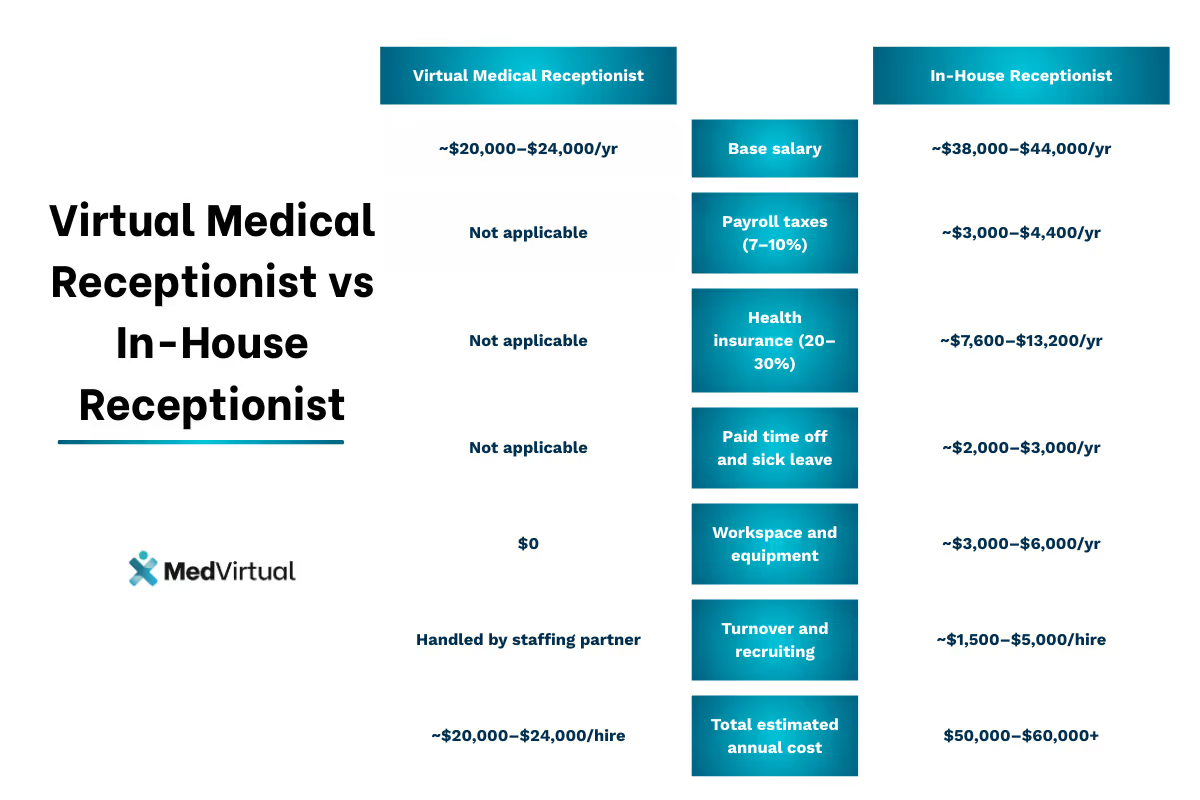
The average salary for a medical receptionist in the United States is approximately $38,084 per year as of early 2026. But that base salary is just the starting point.
When you factor in the true cost of employment, the number grows significantly. Healthcare benefits typically add 20 to 30 percent on top of base salary. Payroll taxes add another 7 to 10 percent. Factor in paid time off, sick leave, and the occasional overtime shift, and you are easily looking at $50,000 to $60,000 per year for a single full-time front desk employee.
Then there is turnover. The healthcare administrative field sees high staff churn, and every departure triggers another cycle of job posting costs, interview time, onboarding, and training before the new hire is fully productive. For smaller clinics, that disruption is felt immediately in call quality, scheduling errors, and patient experience.
A virtual receptionist eliminates most of these variables entirely.
Where Clinics Cut Costs with a Virtual Medical Receptionist
No Benefits, No Payroll Taxes, No Overhead
When you hire a virtual medical receptionist through a staffing partner like MedVirtual, you pay an hourly rate for the role. There are no employer-side payroll taxes, no health insurance contributions, no paid time off accruals, and no workers compensation costs. The rate you agree to is the rate you pay.
MedVirtual's medical administrative assistants start at $11 per hour for junior roles and $13 per hour for senior roles. Compare that to the true loaded cost of an in-house hire and the math becomes very clear, very quickly.
No Physical Workspace Required
An in-house receptionist needs a desk, a computer, a headset, a phone system, and a physical space at the front of your clinic. If you are renting commercial medical office space, every square foot has a cost. A virtual receptionist requires none of that.
For clinics that are space-constrained or looking to open a leaner second location, eliminating the physical front desk footprint is a meaningful operational benefit.
No Turnover Disruption
When an in-house receptionist resigns, your operations feel it immediately. With a staffing partner, a replacement or coverage arrangement can be made quickly without putting your clinic in a bind. There is no scrambling to post a job listing, screen applicants, and onboard someone new while the phones continue to ring.
Scalable Coverage Without Overtime
Call volume at a clinic is rarely flat. Mondays after a holiday weekend, flu season, open enrollment periods, all of these create spikes that can overwhelm a single front desk employee. With a virtual receptionist model, coverage can be scaled up or down based on actual need. You do not pay overtime for a busy week, and you do not pay for idle hours during a slow period.
What Tasks Does a Virtual Medical Receptionist Handle?
The scope of work goes well beyond just answering phones. A trained virtual medical receptionist can manage:
- Appointment scheduling, confirmation, and cancellations
- New patient intake and registration
- Insurance eligibility verification
- Patient callback management
- Referral coordination
- Prescription refill request routing
- After-hours call management and message taking
- Patient portal support
- Prior authorization assistance
The deeper you integrate a virtual receptionist into your workflows, the more your in-clinic team can redirect their time toward direct patient care rather than phone queues and administrative backlogs.
Virtual vs. In-House: Where the Savings Add Up
To make the cost comparison tangible, consider a solo primary care practice with one full-time medical receptionist earning $40,000 per year in base salary.
Adding benefits, payroll taxes, and employment overhead brings the true annual cost closer to $54,000 to $58,000. That same practice, working with a virtual medical receptionist at $13 per hour for 35 hours per week, would spend approximately $23,660 per year. That is a potential annual savings of over $30,000 without sacrificing coverage quality.
For a multi-provider practice that currently runs two or three front desk staff, the savings scale proportionally and can reach well into six figures annually.
HIPAA Compliance Is Not Optional
One concern clinics raise when considering virtual staffing is whether a remote receptionist can handle patient information safely and compliantly. This is a fair question and an important one.
A healthcare-specific virtual staffing partner like MedVirtual trains all staff in HIPAA protocols before they are placed with a practice. This includes proper handling of protected health information (PHI), secure communication standards, and patient verification procedures.
Before working with any virtual receptionist service, confirm that they provide a Business Associate Agreement (BAA), that their staff receive documented HIPAA training, and that they operate on secure, encrypted platforms. You can learn more about how MedVirtual approaches HIPAA-compliant virtual staffing on the platform page.
Which Specialties Benefit Most from a Virtual Medical Receptionist?
While virtually any outpatient practice can benefit, certain specialties tend to see the sharpest impact from transitioning their front desk operations.
High-volume specialties like primary care, pediatrics, and dermatology deal with significant daily call loads. Specialties with complex insurance and referral workflows, such as cardiology, neurology, and orthopedics, benefit from having a dedicated remote professional managing those administrative threads. Mental health and psychiatry practices appreciate the scheduling flexibility and the privacy-sensitive communication training that healthcare virtual receptionists bring.
MedVirtual supports virtual staffing across a wide range of specialties including primary care, cardiology, pediatrics, and orthopedics, among many others.
How to Know If Your Clinic Is Ready to Make the Switch
Not every clinic is in the same situation, but there are some reliable indicators that a virtual medical receptionist would make an immediate positive difference.
Your front desk staff is frequently overwhelmed during peak hours. Calls are going to voicemail and patients are not getting timely callbacks. You recently lost a receptionist and are struggling to hire a replacement. You are opening a second location and want to control staffing overhead. You are paying overtime regularly to cover schedule gaps.
If any of these describe your current situation, the transition to a virtual receptionist model is worth a serious look. Many practices find the switch takes less time and disruption than expected, particularly when working with a staffing partner who handles onboarding and training.
Getting Started with MedVirtual
MedVirtual connects medical and dental practices with trained, HIPAA-compliant virtual receptionists and administrative professionals. The model is built specifically for healthcare, which means the staff understand clinical workflows, EHR systems, and the communication standards your patients expect.
You can explore virtual staffing options or contact the team directly to discuss your practice's specific needs.
Conclusion
The front desk is one of the most important touchpoints in any clinic, but it does not have to be one of the most expensive. A virtual medical receptionist delivers professional, HIPAA-trained coverage at a significantly lower total cost than traditional in-house staffing.
For clinics looking to reduce administrative overhead, stabilize front desk operations, and redirect budget toward patient care, it is one of the most practical operational changes available today.

Your Guide To Common Questions & Solutions