Medical Office Virtual Receptionist vs In-House Staff: Which Is Right for Your Practice?
Every medical office needs a reliable front desk. The question is not whether to have one, it is whether that front desk needs to be physically in your clinic.
As more practices explore virtual staffing, the comparison between a medical office virtual receptionist and traditional in-house staff has become one of the most practical decisions clinic owners face. Both models can work well. Neither is universally superior. The right answer depends on your practice size, call volume, patient expectations, budget, and how deeply you need your receptionist integrated into your daily workflow.
This article gives you an honest side-by-side look at both options so you can make the decision with clear information.
What Each Model Actually Involves
The In-House Medical Receptionist
An in-house receptionist is a full-time or part-time employee physically present at your clinic. They greet patients at the front desk, answer phones, check patients in and out, manage walk-in inquiries, handle co-pays, coordinate with clinical staff in real time, and manage the physical flow of your waiting room.
Their presence is visible and immediate. For patients who value face-to-face interaction, particularly older patients or those navigating complex health situations, an in-house receptionist provides a level of human connection that is genuinely difficult to replicate remotely.
The Medical Office Virtual Receptionist
A medical office virtual receptionist performs the same administrative tasks as an in-house receptionist, but works remotely. They answer inbound calls, schedule and confirm appointments, manage patient intake, handle insurance verification, process referrals, and communicate with clinical staff through secure digital channels.
They are not present in your waiting room, but they can be fully embedded in your practice systems, operating inside your EHR, using your scheduling software, and following your specific workflows and call scripts. When staffed through a healthcare-focused partner like MedVirtual, they are HIPAA-trained professionals familiar with medical terminology and clinical communication standards.
Cost: Where the Difference Is Most Clear
This is where the two models diverge most sharply.
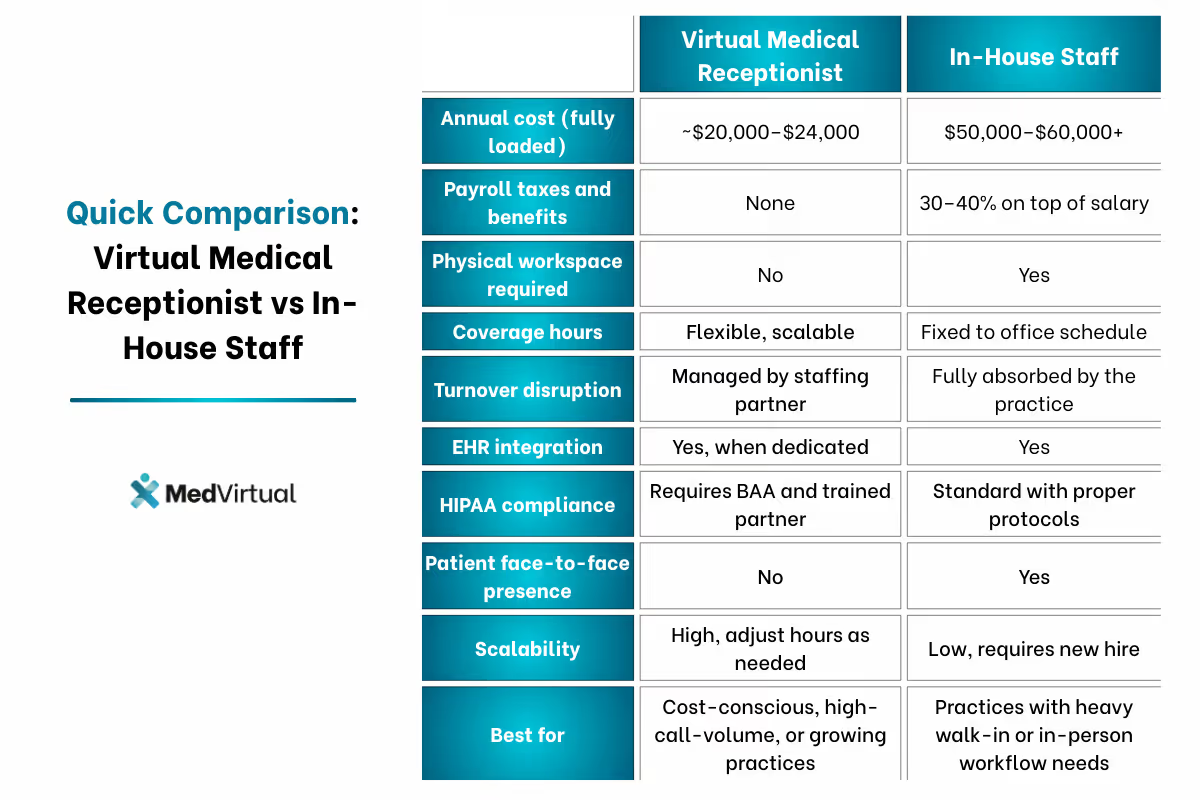
A full-time in-house medical receptionist costs far more than just their salary. When you factor in employer payroll taxes, health insurance contributions, paid time off, sick leave, occasional overtime, and the physical workspace they occupy, the true annual cost of a single in-house front desk employee typically runs between $50,000 and $60,000 or more per year.
Then there is turnover. The average medical receptionist stays two to three years before leaving. Each departure triggers recruiting costs, interview time, training investment, and a period of reduced productivity before the replacement is fully operational.
A dedicated virtual receptionist through a healthcare staffing partner like MedVirtual starts at $11 per hour for junior roles and $13 per hour for senior roles, with no payroll taxes, benefits, workspace costs, or turnover-related hiring expenses. For a practice running 35 hours of front desk coverage per week, the annual cost is approximately $20,000 to $24,000 — a savings of $30,000 or more compared to an equivalent in-house hire.
Coverage and Flexibility
An in-house receptionist works defined hours. When they are sick, on vacation, or dealing with a personal emergency, your front desk coverage drops. You either scramble to cover internally, pay overtime to another staff member, or leave phones unanswered during part of the day.
A virtual receptionist model handles this differently. Coverage adjustments are made through the staffing partner without the disruption of a single employee's absence affecting your operations. Hours can be scaled up during busy periods, such as flu season or open enrollment, and adjusted downward during slower stretches without HR complications.
For practices considering extended hours, a virtual model also makes after-hours coverage far more accessible. Rather than paying in-house staff overtime rates to answer late-afternoon calls or manage after-hours inquiries, a virtual receptionist can be structured to cover those windows at standard rates.
Patient Experience: A Nuanced Trade-Off
This is the area where in-house staff holds a genuine advantage, but the gap is narrower than most assume.
A familiar face at the front desk builds rapport over time. Regular patients recognize your receptionist, and that familiarity contributes to a sense of belonging and trust that matters in healthcare. An in-house receptionist can also respond immediately to physical situations in the waiting room, assist with paperwork on the spot, and read the room in ways a remote professional cannot.
However, for the majority of patient interactions, the quality of the experience depends far more on the person than their location. A well-trained, healthcare-experienced virtual receptionist who knows your practice protocols, speaks warmly on the phone, answers calls promptly, and manages appointments accurately delivers an excellent patient experience. Many patients have no idea they are not speaking with someone sitting in your clinic.
The practices that notice the greatest patient experience impact from virtual staffing are typically those where in-house staff were previously overwhelmed, juggling phone calls while checking in patients, putting callers on hold repeatedly, or missing calls altogether during busy stretches. A dedicated virtual receptionist eliminates those bottlenecks.
Integration and Workflow
One of the more practical questions practices raise is how well a virtual receptionist actually fits into existing systems.
The honest answer is that integration depends on the staffing model. A generic answering service that fields calls for dozens of different businesses will have limited ability to work inside your EHR or follow practice-specific protocols. A dedicated virtual receptionist, trained on your specific tools and workflows, can be as embedded in your systems as any in-house team member.
At MedVirtual, virtual receptionists are placed with specific practices rather than pooled across many clients. They learn your scheduling software, work within your EHR, follow your triage rules, and build familiarity with your providers and clinical team over time. You can learn more about how that integration works on the MedVirtual platform page.
HIPAA and Data Security
Some practice owners assume that in-house staff are inherently more secure for patient data than remote staff. The reality is more nuanced.
HIPAA compliance is about protocols and safeguards, not physical location. An in-house receptionist who mishandles PHI on a shared workstation or discusses patient information within earshot of the waiting room creates real compliance risk. A virtual receptionist operating on encrypted platforms, following documented PHI handling protocols, and covered by a signed Business Associate Agreement can be equally or more compliant than on-site staff.
MedVirtual ensures all virtual receptionists complete HIPAA training before placement and operate within systems designed for HIPAA-compliant healthcare staffing. BAAs are standard.
Which Practices Benefit Most from a Virtual Model
Virtual front desk staffing tends to deliver the clearest results in specific practice situations.
Solo and small group practices that cannot afford a full-time in-house hire but need consistent coverage are strong candidates. Practices experiencing high receptionist turnover that is disrupting operations and burning management time benefit from the stability a staffing partner provides. Practices opening a second location where replicating a full in-house front desk would be expensive and logistically complex can use a virtual model to staff the new site efficiently.
Multi-specialty and high-call-volume practices in specialties like primary care, pediatrics, and dermatology benefit from the scalability of virtual coverage during peak periods without permanent headcount additions.
When In-House Staff Remains the Right Choice
Being balanced means acknowledging where in-house staff genuinely wins.
Practices that serve a predominantly elderly patient population, where patients strongly prefer face-to-face interactions for check-in and wayfinding, may find that the in-person presence of a receptionist is genuinely important to patient satisfaction.
Practices with highly complex walk-in workflows, managing physical paperwork, coordinating specimen collection logistics, handling cash payments, or supporting patients who need in-person assistance with forms, benefit from having someone physically on-site.
For some large, multi-provider practices that have already invested in a stable, well-trained in-house team with low turnover, the case for switching is less urgent. The goal is not to replace in-house staff for its own sake, but to make a deliberate decision about what serves the practice and its patients best.
For a deeper look at how the two models compare on the administrative side more broadly, the MedVirtual article on in-house vs. virtual medical admin assistants provides additional context.
Making the Decision for Your Practice
If your current front desk situation involves frequent staff turnover, unanswered calls, overwhelmed in-house staff, or overhead costs that are difficult to justify, a virtual receptionist is worth a serious evaluation.
If your practice relies heavily on in-person patient interactions at the front desk and your in-house team is performing well, the case for switching is less pressing, though a hybrid model, using a virtual receptionist to handle phone overflow and after-hours calls while keeping in-house staff for walk-in interactions, is increasingly common.
MedVirtual can walk you through what a virtual staffing arrangement would look like for your specific practice. You can explore virtual staffing options or reach out directly to discuss your needs.

Conclusion
The choice between a medical office virtual receptionist and in-house staff is not about which option is universally better. It is about which model fits your practice's operational reality, patient population, and financial situation.
For most small to mid-sized practices, the virtual model offers meaningful cost savings, greater scheduling flexibility, and comparable patient experience, particularly when the virtual receptionist is a dedicated, healthcare-trained professional embedded in your systems rather than a generic answering service.
For practices where physical presence at the front desk is genuinely essential, in-house staffing remains the right choice. Many practices find the best outcome by blending both approaches.

Your Guide To Common Questions & Solutions