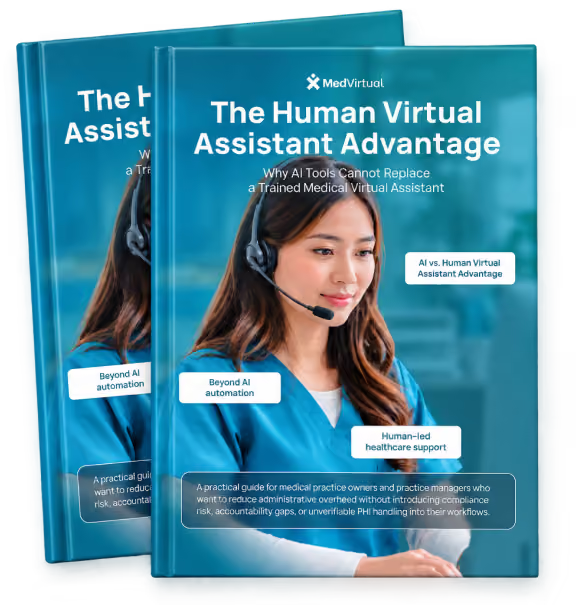
The Human VA Advantage
Every medical practice in the US is being pitched AI tools for scheduling, billing, documentation, and patient communication. The pitch sounds compelling. The compliance and accountability risks rarely get mentioned.
This whitepaper gives practice owners a practical, side-by-side look at where AI tools work in clinical administration, where they fail, and what a trained human virtual assistant delivers that no software update can replicate.
Thank you! Your submission has been received!
Oops! Something went wrong while submitting the form.
What You’ll Learn Inside
Why AI tools fail at insurance denial management, prior authorization, and complex patient communication, and what the compliance exposure actually looks like.
What HIPAA requires from any tool or person who handles PHI, and why AI platforms introduce accountability gaps that a BAA cannot fully close.
The real cost comparison between AI tool subscriptions, in-house hires, and a dedicated HIPAA-trained virtual assistant.
What a human virtual assistant handles that AI cannot: payer-specific knowledge, judgment calls, accountability, and consistent performance tracking.
Inside The Human VA Advantage
The Biggest Challenge
Most practices evaluating AI tools are focused on cost reduction and time savings. Those are real benefits, in the right contexts.
The problem is that the workflows that consume the most administrative time in a medical practice are also the workflows that carry the highest compliance risk when handled incorrectly. AI tools can assist with parts of these workflows. They cannot own them.
The problem is that the workflows that consume the most administrative time in a medical practice are also the workflows that carry the highest compliance risk when handled incorrectly. AI tools can assist with parts of these workflows. They cannot own them.
The Biggest Opportunity
A dedicated human virtual assistant matched to your EMR, your payer mix, and your specialty handles the full administrative cycle with accountability that AI cannot replicate.
The whitepaper shows exactly how, with a section-by-section comparison of what each model can and cannot deliver, a real cost breakdown, and a framework for deciding which tasks belong to AI, which belong to a virtual assistant, and which belong to your in-house team.
The whitepaper shows exactly how, with a section-by-section comparison of what each model can and cannot deliver, a real cost breakdown, and a framework for deciding which tasks belong to AI, which belong to a virtual assistant, and which belong to your in-house team.
Ready to See the Full Comparison?
Get the complete whitepaper and understand exactly where AI tools end and where a trained medical virtual assistant begins.
Access the Full Whitepaper