Human Virtual Assistant vs. AI in Healthcare
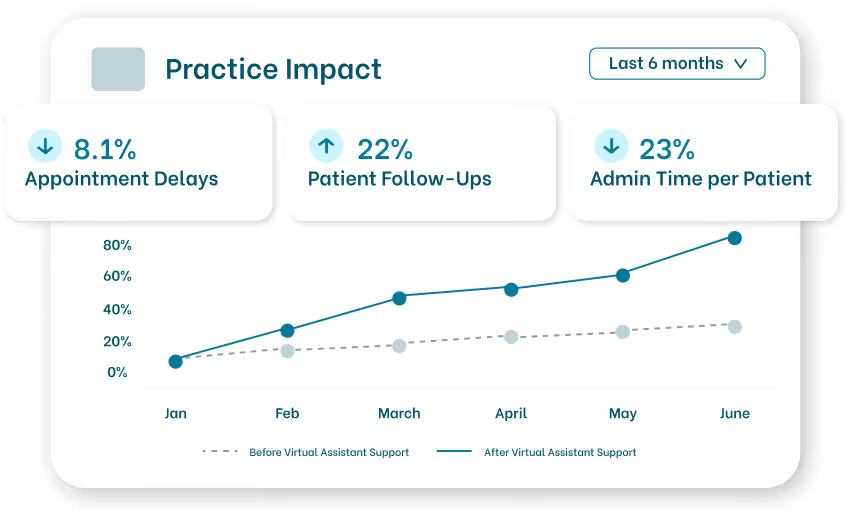
AI receptionist vs human receptionist comes down to rules versus judgment. AI handles reminders, confirmations and status checks, while a trained human virtual assistant owns denials, specialty billing, prior authorization escalations and difficult patient calls.

Trusted by 250+ Healthcare Practices Across the US












Why We Publish This Comparison
MedVirtual places human virtual assistants for the work that needs judgment, payer knowledge and accountability. We say where AI helps, because an honest comparison serves your practice better than a sales claim.
AI Receptionist vs Human Receptionist at the Front Desk
AI medical receptionist

Human receptionist

AI Receptionist vs Human Receptionist: The Full Task Split
Denials and payer rules, handled daily.
Persistent payer follow-up.
Review of AI-drafted notes.
How AI and Your Virtual Assistant Work Together
AI handles the routine pass
Exception flagged
Your virtual assistant takes over with full context
Who Answers When Something Goes Wrong
A BAA assigns duties
The accountability gap
A named person answers
Is an AI Medical Receptionist HIPAA Compliant?
It depends on the vendor's setup, not the product label. An AI medical receptionist that handles protected health information (PHI) for your practice is a business associate, so you need a BAA before it takes a call.
HHS defines a business associate as a person that performs services for a covered entity involving creating, receiving, maintaining or transmitting PHI. HHS also states that a cloud provider handling ePHI is a business associate, even when it cannot read the data.
A BAA is the starting point. Proof of compliant operation comes from the checks above.
What a Human Virtual Assistant Delivers
Dedicated and full-time
Client Success Manager
KPI tracking from Day One
HIPAA-trained and BAA-signed
Fast start

Proven. Trusted. Recommended.

Related Resources
Guide to AI Virtual Assistants
The human advantage
The Whitepaper
Download the Whitepaper
Frequently Asked Questions
Match Every Task to an Owner
HIPAA-trained. Ready in 3 to 5 days. No long-term contract.